
Programme
Peace Clubs & Community Peace Circles
Peace is something you practise, not just something you watch.
Twice a month, face to face, young people meet to talk, create and take one small action for peace.
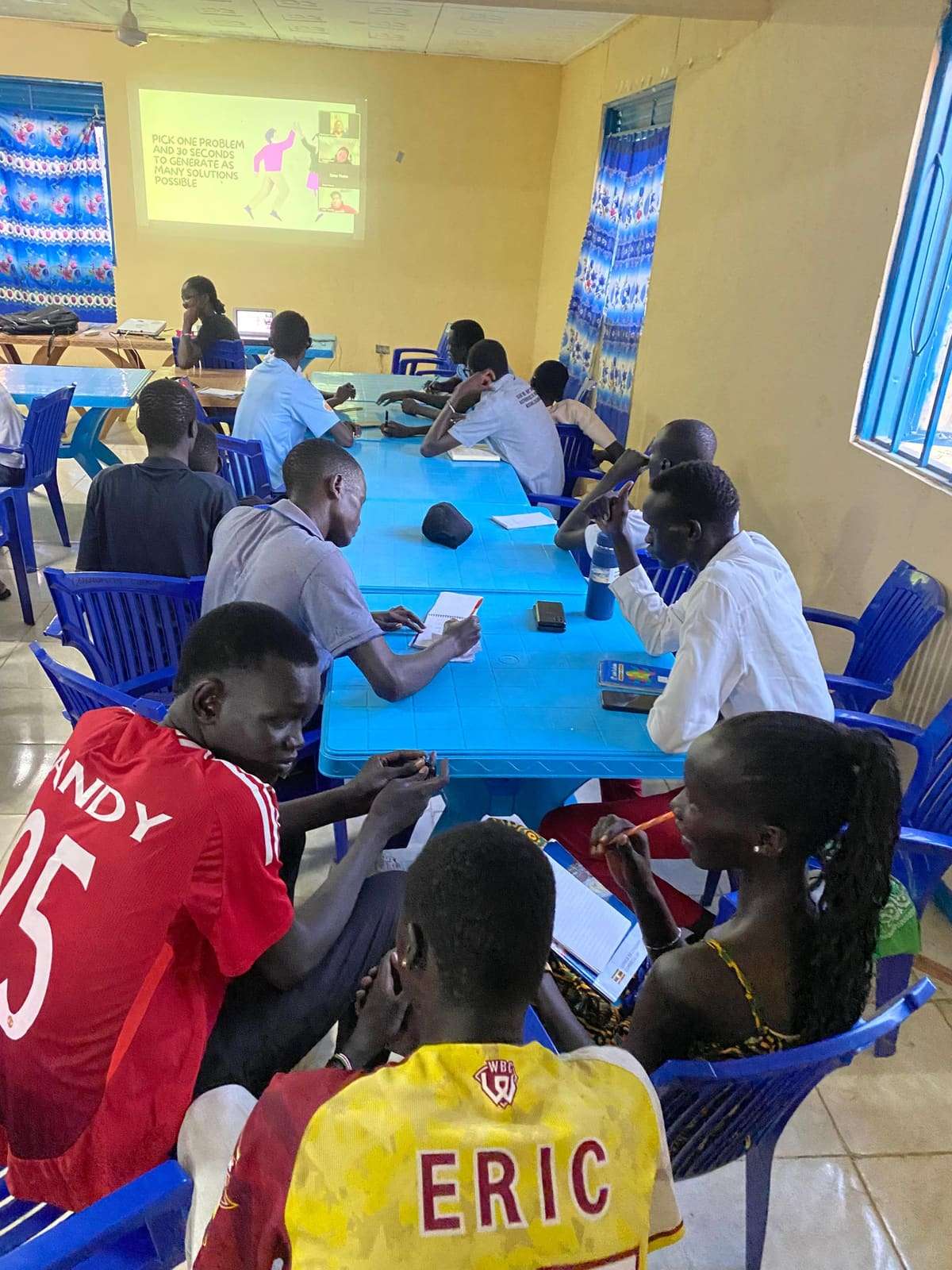
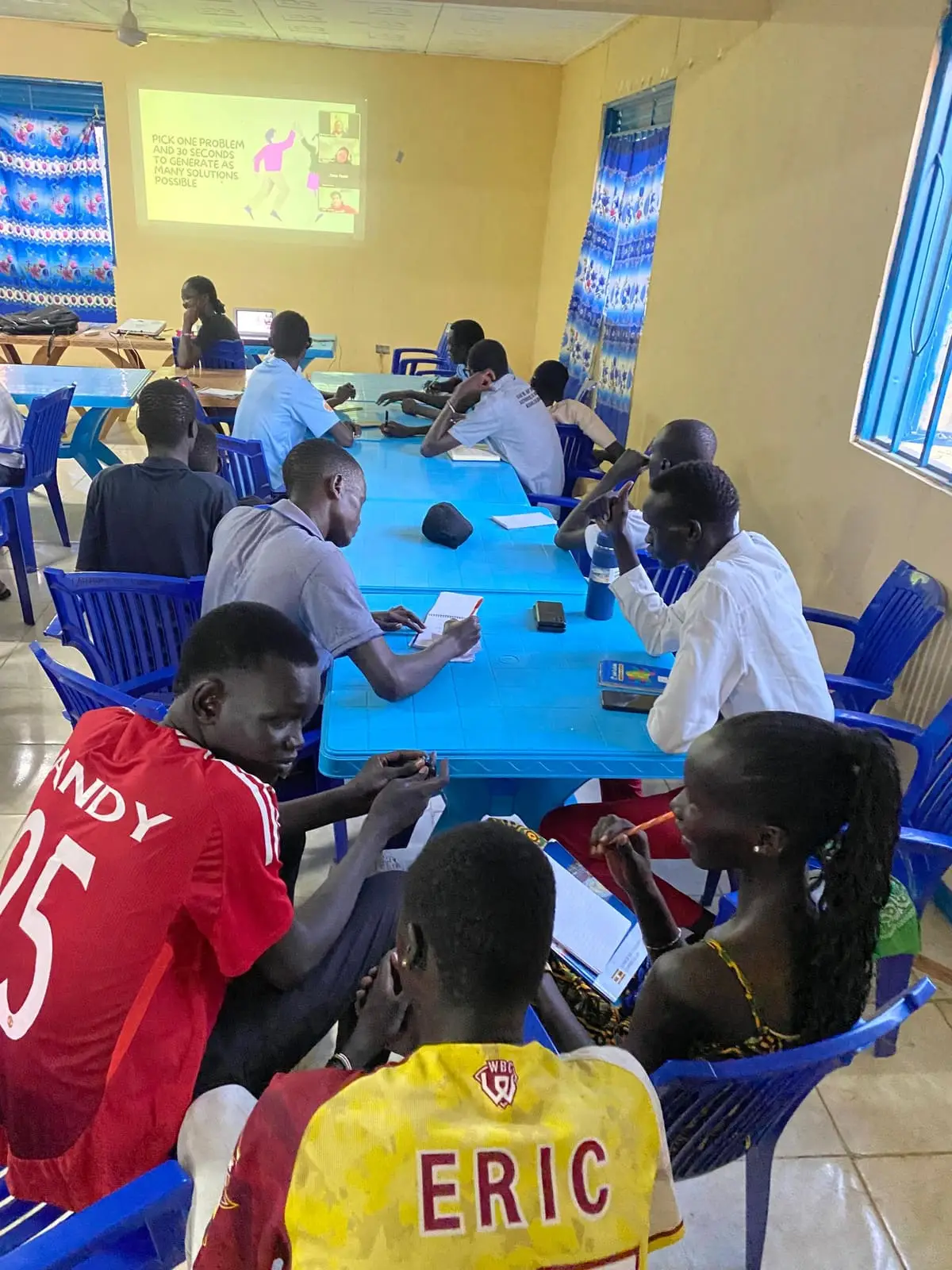
View photo: Young people at a workshop around long blue tables
| Detail | School Peace Clubs | Community Peace Circles |
|---|---|---|
| Who | Secondary students | Out-of-school young adults, 18–35 |
| Size | 25–40 members, at least 40% girls | 12–20 people |
| Hosted by | The school, with a Patron or Matron named by the head teacher | A trusted group: church youth fellowship, youth association, student union or women’s group |
| Meets | Twice a month, 60–90 minutes, during term | Once or twice a month, 90 minutes |
| Led by | Elected student leaders, supervised by the Patron or Matron | A volunteer from the host group, briefed by us |
What happens in a club
One meeting a month follows our peace curriculum. The other uses that month’s content — a Letter for Peace, a podcast clip or a Peace Talk — to start a discussion. Each month the club carries out one supervised school action, like a peace assembly, an art display or a short drama, and members take home a simple family question, such as asking a parent how disputes were settled when they were young.
What happens in a circle
Every session has three steps: listen to a short piece of content, discuss one question, and agree one small action before the next meeting. If a live local dispute comes up, the facilitator refers it to chiefs or established mediators.
Pilot status
We are working with 2–3 secondary schools and 1–2 community groups during the pilot. First club meetings: November 2026.